Monday, 6 June 2011

R F Langley 1938-2011


 On Saturday afternoon the Swedenborg Hall hosted a memorial reading for Roger Langley who died in January. I had the pleasure of hearing him read a couple of years back with Peter Riley at Dulwich College. His slim Collected Poems came out with Carcanet in 2000, and a further volume, The Face of It, appeared from the same publisher in 2007. Shearsman published a selection from his Journals in 2006. These in themselves are extraordinary and apparently only a fraction of the whole. The writing is as good as Gilbert White’s. The reading was evidence enough of the regard in which Langley’s work is held. It featured Jeremy Prynne, Geoff Windle, Peter Riley, Tom Lowenstein, Wendy Mulford, John Welch, Thomas A Clark (read by Andrew Brewerton), Diana Quick, Michael Haslam, Michael Schmidt, Denise Riley, Tony Lopez, Bob Walker, Andrew Brewerton and Helen MacDonald.
Thursday, 2 June 2011

Monday, 30 May 2011

Thursday, 26 May 2011
the Australian Poetry Library debacle
The Australian poet πο famously avoided putting his own work and that of other poets in the magazines he had edited up on the web. His rationale for this was that the poems might be ‘stolen’, taken out of their contexts and misused by organisations with other agendas. I found it strange that a poet who saw his work as both political and public should opt out of a medium that would put the work out there. Now I’m not so sure he wasn’t right.
A few years ago a website run by John Tranter gave poets room to present a selection of their work together with bibliographies, critical pieces, photographs, whatever they deemed fit for the space. This site closed down about four years back. We were told that it would be resurrected with institutional support (the University of Sydney) and asked for our permission to include the existing material. I received a further email about this in January 2010 (I was addressed as ‘Laurence [Laurie] Gould’, conflating my name with that of another poet). John Tranter would be a salaried advisor to the project and it would be set up in conjunction with CAL (the Copyright Agency Ltd), a body dedicated to the fair distribution of fees for the work of authors and publishers. A large amount of public money ($600,000 I gather) was granted to the forthcoming Australian Poetry Library.
All seemed well. Until, at the beginning of this month (May) when quite by accident I was allowed a preview of the site. It would otherwise have remained inaccessible possibly up until May 25th when it was scheduled to be launched at a special event at Government House, NSW, as part of the Sydney Writers' Festival. I discovered that instead of the brief selection of my work which had appeared on the earlier site some 465 ‘poems’ had been uploaded. I say ‘poems’ because what I found on the site were often enough sections of poems that were never intended to be free-standing. I found poems by other poets from books I had shared with them attributed to me. I found some poems printed in different versions and some poems duplicated when they had appeared in different books. I found an uncountable number of layout errors and even spelling mistakes. Apparently the job of putting up the poems had been outsourced for financial reasons to a centre on the Subcontinent where the knowledge of html had taken precedence over any understanding of the presentation of poetry.
The new site differs fundamentally from the original one. Instead of being a user-friendly resource for the poets themselves as well as a general poetry audience APL seems to be directed largely towards secondary students. A google-style function dumbs down poetry by enabling readers to look up images, poems about love, ‘funny poems’. The categorisations are often crude (though a glossary of poetic terms is, I suppose, relatively useful). The page design is bordered by what could be lime-green corrugated iron, though it echoes fustier aspects of the 1951 ‘Festival of Britain’ aesthetic where stylised curtains open onto the ‘stage’ of poetry (if you think I exaggerate, look here). Although the site presents itself as an educational resource I fear that it will do little for any genuine appreciation of poetry. A friend once observed that the poems of Bruce Dawe were popular in Australian schools because English teachers are not often interested in poetry themselves and Dawe’s work enables them to use the poems to talk about ‘issues’. The functions on the APL site pander to this tendency suggesting that poems are mere containers of information that could easily enough be accessed anywhere else.
I promptly wrote to those responsible at the University of Sydney, to CAL, to the Australian Society of Authors and to several of the other poets represented on the site. The other poets all found similar mistakes (and in some instances misattributions). None of them had been informed about what pieces of their own work were to go up on the new site. Their publishers hadn’t been asked either. I suggested that there had been serious breaches of copyright and a serious breach of authors’ moral rights.
At the time of writing the APL site will have become public. I have had my selection reduced to 26 poems though there are still errors. Others have not been so fortunate. It has been an experience I would rather have avoided. It is certainly an experience that could have been avoided if only APL had entered into a dialogue with those whom it claims to represent. Indeed it seems incomprehensible that a body like the CAL should have associated itself with a project that has run roughshod over the wishes of authors and their print publishers (Brandl & Schlesinger had just reprinted John Forbes’ Collected Poems without having been told that the entire book would be up on the website). It is a state of affairs almost beyond belief.
Monday, 23 May 2011

Thursday, 19 May 2011
another empty shopfront in Margate
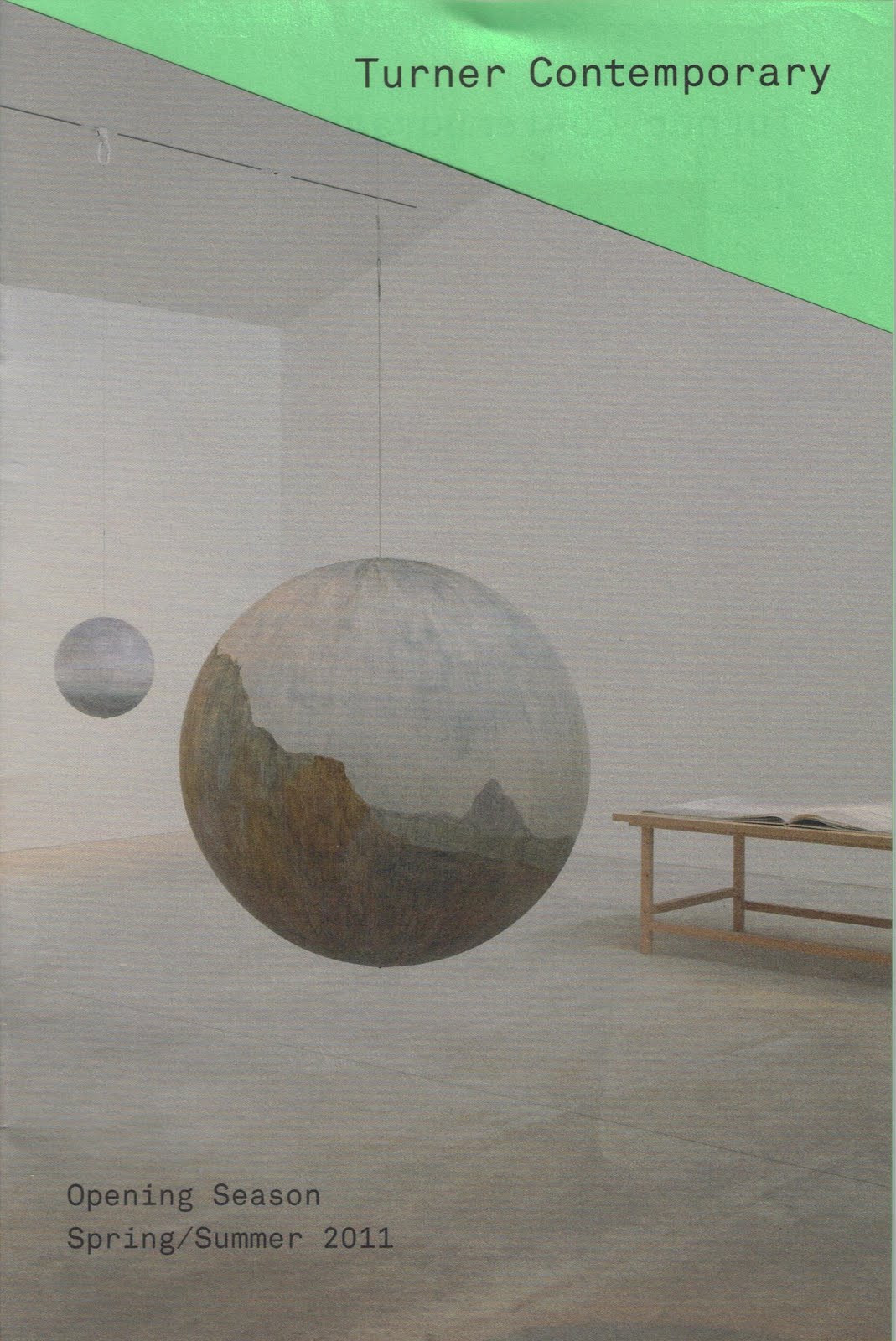

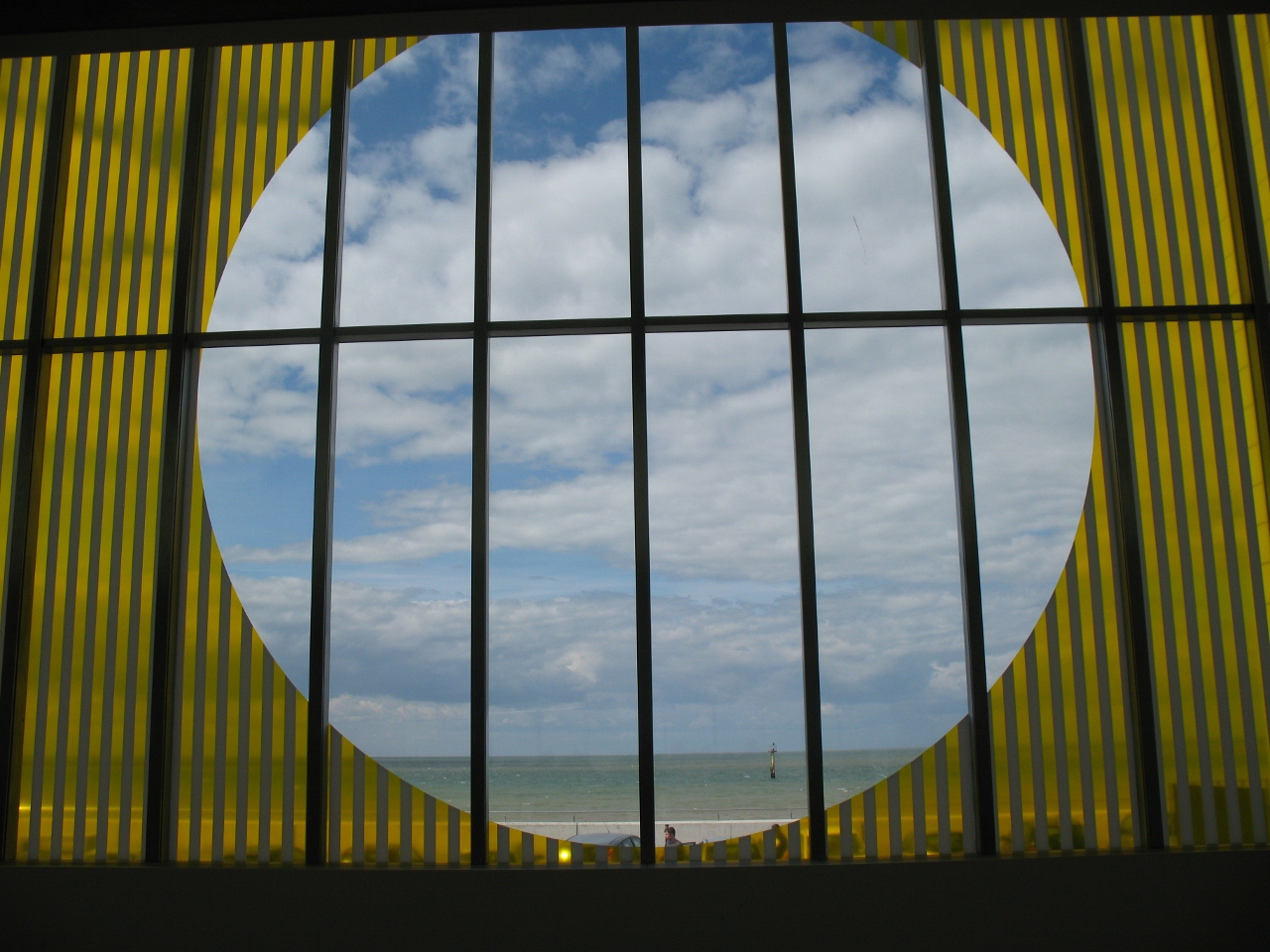 and it’s called the Turner Gallery. I had eagerly anticipated its opening and had liked what I saw of the building, its plain modernism refreshing after all of the ‘signature’ efforts of recent years. After visiting the gallery my first thought was ‘I’ve driven this far to see this?’ Certainly art education seems well served, yet the galleries themselves resemble children’s playrooms run by sadists (the children aren’t allowed to touch anything). It was like being inside a bouncy castle that didn’t bounce. Now don’t get me wrong, I like minimalism. But so much contemporary art seems instead to be primarily conceptual work that then goes on to illustrate itself monotonously. I could say the same thing about some recent poetry.
Subscribe to:
Posts (Atom)